Education has always been about knowledge, skills, and preparation for life. But in 2026, artificial intelligence is reshaping what it actually means to be “educated.” It’s no longer just about memorizing facts or passing exams. Instead, education is becoming more about adaptability, critical thinking, and the ability to work alongside intelligent systems. AI tools are now deeply embedded in classrooms, workplaces, and personal learning environments. As a result, the definition of learning is shifting from static knowledge to dynamic, ongoing development.
Knowledge Is No Longer the Main Measure of Education
For a long time, being educated meant knowing a lot of information. Students were expected to memorize facts, formulas, and historical details. But with AI systems now able to retrieve information instantly, that definition is changing quickly. Today, it matters less whether someone can recall information and more whether they can understand, interpret, and apply it. AI can provide answers in seconds, but it cannot replace human judgment or reasoning. This shift is pushing education systems to focus more on thinking skills rather than memorization. Being educated is becoming less about what you know and more about how you use it.
AI Tutors Are Personalizing the Learning Experience

One of the biggest changes AI has brought to education is personalization. Tools powered by artificial intelligence can now adapt to a student’s learning speed, strengths, and weaknesses. Platforms like Khan Academy are already integrating AI-driven tutoring systems that guide students step by step through complex topics. Instead of a one-size-fits-all classroom model, learners now receive real-time, customized support. This kind of adaptive learning means students can progress in ways that suit them individually, making education more flexible and efficient than ever before.
Critical Thinking Is Becoming More Important Than Memorization
As AI becomes better at handling information, human learners are being pushed toward higher-level thinking skills. The ability to analyze, question, and evaluate information is now more valuable than simply recalling it. Students are increasingly encouraged to challenge AI-generated answers rather than accept them unquestioningly. This creates a new educational focus where skepticism and reasoning are essential skills.
Creativity Is Becoming a Core Academic Skill
AI has also changed the role of creativity in education. With tools that can generate essays, images, code, and music, creative output is more accessible than ever before. However, this does not make human creativity less important—it makes it more refined. Educated individuals are now expected to guide AI tools creatively, shaping outputs, refining ideas, and combining technology with original thinking. The focus is shifting from producing everything manually to directing intelligent systems effectively. In this sense, creativity is evolving into a collaboration between human imagination and machine capability.
Teachers Are Becoming Learning Guides Instead of Information Sources
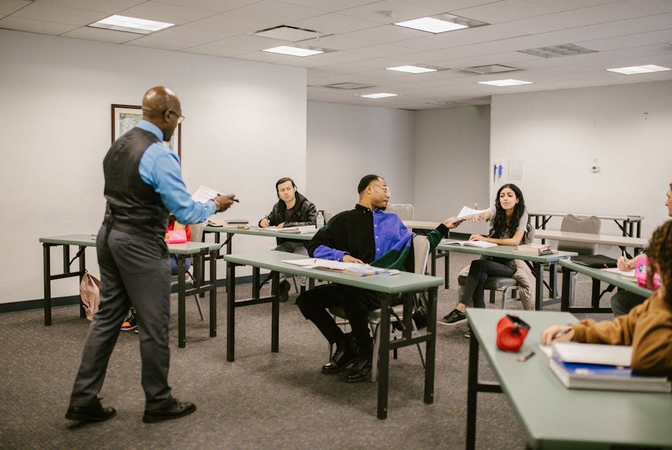
The role of educators is also changing significantly. Teachers are no longer the primary source of information, since students can access knowledge instantly through AI systems. Instead, educators are becoming mentors and guides who help students navigate information, develop critical thinking skills, and apply knowledge in meaningful ways. They focus more on discussion, problem-solving, and emotional support rather than traditional lectures. This shift is redefining the classroom as a space for exploration rather than simple information delivery.
Lifelong Learning Is Replacing One-Time Education
In the past, education was often seen as something that ended after school or university. Today, that idea no longer fits reality. Because AI and technology are constantly evolving, skills need to be updated continuously. Being educated now means being willing to learn throughout life. Professionals must regularly adapt to new tools, systems, and industries. This has led to a rise in microlearning, online courses, and flexible training programs.
Artificial intelligence is fundamentally changing what it means to be educated. Instead of focusing on memorization and static knowledge, modern education emphasizes adaptability, critical thinking, creativity, and lifelong learning. AI tools are not replacing education but reshaping it into something more dynamic and personalized. Students are learning how to work with technology rather than compete against it, and educators are evolving into guides who support deeper understanding.